

Deciding when to start swimming lessons is a common question for parents. Should you introduce your child to water as a baby, wait until they are a toddler, or begin when they are old enough to follow instructions independently?
The answer depends on what you want your child to learn, their individual readiness and the type of swimming lessons available.
What You Should Know
Some programmes introduce babies to water from the first few months of life, while formal swimming lessons for young children typically focus on building water confidence, developing basic skills and progressing towards independent swimming.
At Elites Swimming, children can start private swimming lessons from age two and group swimming lessons from approximately 34 months. Our teaching approach focuses on developing confidence, technique and swimming ability through a structured progression pathway.
This guide explains when to consider swimming lessons, how to recognise readiness, what parents should know about common misconceptions and how to choose an appropriate starting point for their child.
At What Age Should a Child Start Swimming Lessons?
There is no single age that is right for every child. It is important to distinguish between early water familiarisation, parent-and-child swimming sessions and structured swimming lessons designed to develop independent skills.
Here is a general guide to the different stages.
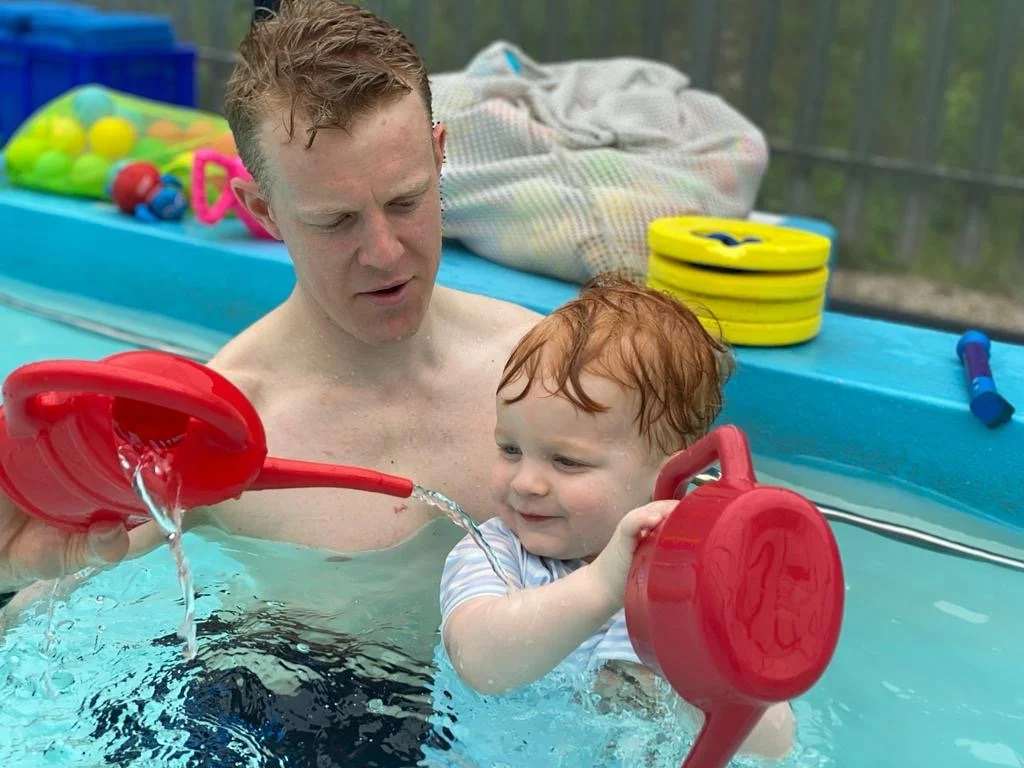
Babies: Introducing Water Familiarisation
Some specialist baby swimming programmes welcome babies from around three months old, although the minimum age varies between providers.
At this stage, activities are generally centred on gentle, supported experiences in the water rather than independent swimming.
Early water familiarisation may help babies and parents become more comfortable in a swimming pool. However, babies cannot be expected to swim independently or keep themselves safe around water.
Parents considering baby swimming should check the provider's minimum age, pool temperature requirements and teacher qualifications. If they have concerns about their baby's health or suitability for swimming, they should seek advice from an appropriate healthcare professional.
Toddlers: Building Early Swimming Skills
As children grow, they may become more comfortable with new environments, following simple instructions and participating in structured activities.
For some toddlers, this can be a suitable time to begin private swimming lessons, where teaching can be tailored to their current confidence and ability.
Elites Swimming offers children's private swimming lessons from age two. These sessions provide focused instruction and can be useful for children who benefit from individual attention as they become familiar with swimming.
At this stage, learning may focus on:
- Becoming comfortable in the water.
- Developing supported movement and body control.
- Beginning to understand basic swimming instructions.
- Building positive experiences around swimming.
- Gradually developing appropriate foundational skills.
Children develop at different rates, so the aim is to introduce skills progressively rather than expect every child of the same age to achieve identical results.
Preschool Children: Starting Structured Group Lessons
For many families, the preschool years provide an opportunity to establish a regular swimming routine.
Our children's group classes are available from approximately 34 months, with swimmers taught through a structured progression pathway.
Group lessons can help children learn alongside others while developing their confidence, coordination and swimming technique.
Depending on their current ability, children may work towards:
- Developing water confidence.
- Learning to control their breathing.
- Improving body position and movement.
- Developing their swimming strokes.
- Building awareness of water safety.
- Progressing towards more advanced swimming skills.
Parents can explore the children's group swimming lessons programme to learn more about the teaching approach and progression pathway.
School Age: Is It Too Late to Start?
Absolutely not. A child who has not started swimming lessons as a toddler can still begin learning when they are older.
Some children start school with little experience of swimming, while others have enjoyed regular pool visits but have not received structured tuition.
School-age children may be able to follow instructions more independently, understand explanations and practise particular movements with greater awareness. However, their confidence and ability will still vary.
The important thing is to find an appropriate starting point and give them opportunities to develop their skills consistently.
If your child is older and has little or no swimming experience, contact us to discuss their current ability and the most suitable available class.
Is It Better to Start Swimming Lessons Earlier?
Starting swimming lessons at a younger age can provide more time to become familiar with the water and develop skills gradually. However, starting early does not automatically mean a child will learn faster or become a confident swimmer sooner.
There are several factors to consider.
Potential Benefits of Starting Young
Early swimming experiences may help children:
- Become more familiar with swimming pools and the water environment.
- Develop positive associations with swimming.
- Practise movement and coordination through age-appropriate activities.
- Establish a regular swimming routine.
- Begin learning important water safety habits with adult guidance.
For parents, starting early can also provide an opportunity to learn how to support their child's development and encourage safe behaviour around water.
Why Starting Later Can Also Work Well
Some children are not ready for structured lessons when they are very young. Others may need additional time to become comfortable in unfamiliar surroundings.
Starting later can have advantages, particularly if a child is better able to communicate their needs, understand instructions or engage with structured activities.
What matters most is not simply the age at which lessons begin, but whether the teaching environment, activities and expectations are suitable for the learner.
The takeaway: Starting early can be beneficial, but there is no need to treat swimming lessons as a race against other children. A suitable programme should help each swimmer develop progressively.

How Do You Know If Your Child Is Ready for Swimming Lessons?
Age provides a useful starting point, but it does not tell you everything about a child's readiness.
Before booking, consider how your child responds to water, unfamiliar environments and new activities.
Signs Your Child May Be Ready
Your child may be ready to explore lessons if they:
- Show curiosity about swimming or water-based activities.
- Can tolerate being in a swimming pool environment.
- Are becoming comfortable with gentle water contact.
- Can engage with activities appropriate to their developmental stage.
- Are able to participate with support from a parent or teacher.
- Have a suitable lesson option available for their age and ability.
These are helpful considerations rather than a checklist your child must complete before starting.
A child does not need to be able to swim before joining a beginner class. The purpose of lessons is to help them develop the necessary skills.
What If Your Child Is Nervous Around Water?
Being nervous around water does not necessarily mean your child is not ready for lessons.
Some children need more time to become comfortable with the pool environment, while others may have had a difficult previous experience.
You can help by:
- Talking positively about swimming without putting pressure on your child.
- Explaining what a lesson involves before attending.
- Allowing them to ask questions about the pool and teacher.
- Choosing a class appropriate for their current confidence.
- Speaking to the swim school about any concerns before booking.
Avoid forcing your child to enter the water or participate in an activity that causes significant distress. A gradual, supportive introduction is more appropriate than rushing them through unfamiliar experiences.
If you think your child would benefit from more individual attention, explore private swimming lessons for children. These sessions offer a more personalised teaching format than group classes.
Why Do Parents Receive Different Advice About When to Start?
Parents can encounter conflicting advice online, from other parents and from different swimming providers. Much of this comes down to the fact that people are often talking about different types of swimming experiences.
Understanding these distinctions can make it easier to decide what is right for your family.
1 "Babies Can Start Swimming From Birth"
Some swimming guidance discusses introducing babies to water from a very early age. However, this does not mean every swimming provider accepts newborns or that all babies should begin lessons immediately.
Specialist baby swimming programmes have different requirements from structured lessons for toddlers and older children.
What parents should know: Check the minimum age and requirements of the specific provider. Early water familiarisation is not the same as learning to swim independently.
2 "Children Should Wait Until They Are Three or Four"
Some providers begin their structured group programmes at preschool age, but this does not mean younger children cannot have appropriate swimming experiences.
The difference is often the lesson format, teaching objectives and level of individual support available.
What parents should know: Look at the provider's available lesson types. At Elites Swimming, private lessons are available from age two, while group lessons start from approximately 34 months.
3 "The Younger They Start, the Faster They Learn"
Starting young can provide more time to develop familiarity with the water, but age alone does not determine progress.
A child's confidence, developmental stage, consistency of attendance and suitability of instruction all influence their learning experience.
What parents should know: Choose a programme that supports gradual progression. Avoid comparing your child's development too closely with that of other swimmers.
4 "If My Child Is Confident in Water, They Can Swim"
Enjoying splashing, playing in a pool or being comfortable in shallow water does not mean a child can swim safely.
Water confidence and swimming competence are different things. A confident child may still lack the ability to float, control their breathing, travel through the water or respond appropriately in an emergency.
What parents should know: Confidence is a useful foundation, but it must be supported by the development of practical swimming and water safety skills.
No swimming lesson makes a child completely safe around water. Children require appropriate, continuous adult supervision, including when they have attended lessons or use flotation aids.
5 "Swimming Lessons Mean My Child Will Be Safe Around Water"
Swimming lessons can contribute to water competence, but they cannot remove all risks.
Swimming ability varies according to the environment, conditions and situation. A child who can swim in a pool may not have the skills needed to manage cold water, strong currents or an unexpected fall into open water.
What parents should know: Swimming lessons should form part of a wider approach to water safety, including supervision, understanding hazards and following safety instructions.
Group Swimming Lessons or Private Lessons: Which Should You Choose?
Once you have considered your child's age and readiness, the next decision is the type of lesson that may suit them.
Both group and private lessons can support swimming development, but they provide different learning environments.
Children's Group Swimming Lessons
Group lessons allow children to learn alongside other swimmers and follow a structured programme.
They may be suitable for children who are comfortable participating in a group and benefit from learning within a shared class environment.
At Elites Swimming, group lessons focus on:
- Developing water confidence and swimming ability.
- Improving technique through structured stages.
- Introducing skills progressively.
- Building towards increasingly advanced swimming.
- Providing opportunities for individual feedback within a group.
Explore children's group classes for further information.
Children's Private Swimming Lessons
Private lessons provide a more individualised format, with teaching tailored to the swimmer's current ability and goals.
They may be worth considering if your child:
- Is a beginner who would benefit from individual attention.
- Needs additional time to become comfortable in the water.
- Wants to work on particular swimming skills.
- Would benefit from extra coaching alongside group lessons.
- Has specific goals that require a more focused approach.
Elites Swimming offers private lessons for children from age two, subject to availability and suitability.
You can find out more about children's private swimming lessons or contact the team to discuss your child's needs.


What Should Children Learn First?
Children do not need to master a particular stroke before beginning lessons. Early teaching should focus on developing the foundations needed for further swimming skills.
The exact progression depends on the learner and the teaching programme, but important areas include the following.
Water Confidence & Familiarisation
Children need opportunities to become comfortable in the pool environment and understand how to respond to their teacher.
This may include supported movement, becoming familiar with splashing and gradually developing confidence in the water.
Body Position & Movement
Learning how to balance, float and move through the water helps children build the foundations for more independent swimming.
These skills should be introduced at a level appropriate to their confidence and ability.
Breathing & Coordination
As children develop, they can work on controlling their breathing and coordinating their movements.
These skills contribute to more efficient swimming and support the development of different strokes.
Stroke Development & Water Safety
Once appropriate foundations are established, swimmers can progress towards more developed stroke techniques and additional water safety skills.
At Elites Swimming, the bespoke award and criteria syllabus is designed to introduce skills at appropriate stages, with technique and continued progression forming important parts of the teaching approach.
Frequently Asked Questions
What is the best age to start swimming lessons?
There is no single best age for every child. Some programmes offer baby swimming sessions from the first few months, while others focus on toddlers and preschool children. Our private lessons start from age two, and group lessons start from approximately 34 months.
Can a two-year-old learn to swim?
A two-year-old can begin age-appropriate swimming lessons, although the skills they develop will depend on their individual readiness and the type of instruction available. Elites Swimming offers private children's lessons from age two.
Should I choose private or group lessons for a young child?
This depends on your child's confidence, ability and preferred learning environment. Private lessons provide individualised instruction, while group lessons offer structured learning alongside other swimmers. Contact the team to discuss which option may be suitable.
Is it too late to start swimming lessons at five or six years old?
No. Children can start learning at different ages. An older beginner can still develop water confidence, swimming technique and essential water safety skills through an appropriate programme.
Does starting swimming lessons early prevent drowning?
Swimming lessons can help children develop important water safety and swimming skills, but they do not eliminate drowning risk. Children must always receive appropriate adult supervision around water, regardless of their swimming ability.
Should my child be confident in the water before starting lessons?
No. Beginner lessons are designed to help children develop confidence as well as swimming ability. The important thing is to choose a suitable class and introduce skills gradually.
How long does it take for a child to learn to swim?
There is no fixed timeframe. Progress depends on factors such as starting ability, confidence, consistency and the skills being taught. Regular attendance and suitable instruction help children develop over time.
Find the Right Time to Start Your Child's Swimming Journey
The right time to start swimming lessons depends on your child's age, confidence, development and the teaching options available.
Starting young can provide opportunities to become familiar with the water, but there is no need to rush or compare your child with others. What matters is finding a suitable programme that supports their development and allows them to build skills progressively.
At Elites Swimming, children can start private lessons from age two or group lessons from approximately 34 months. Our teaching approach focuses on technique, confidence and progression through our own bespoke award and criteria syllabus.
If you are considering swimming lessons for your child, we can help you explore the available options.
Ready to get started?
- Explore our children's group swimming lessons.
- Find out more about children's private swimming lessons.
- Learn about our teaching approach and award criteria.
- Contact Elites Swimming to discuss current availability.
Give your child the opportunity to build confidence, develop their technique and work towards becoming a more capable swimmer.